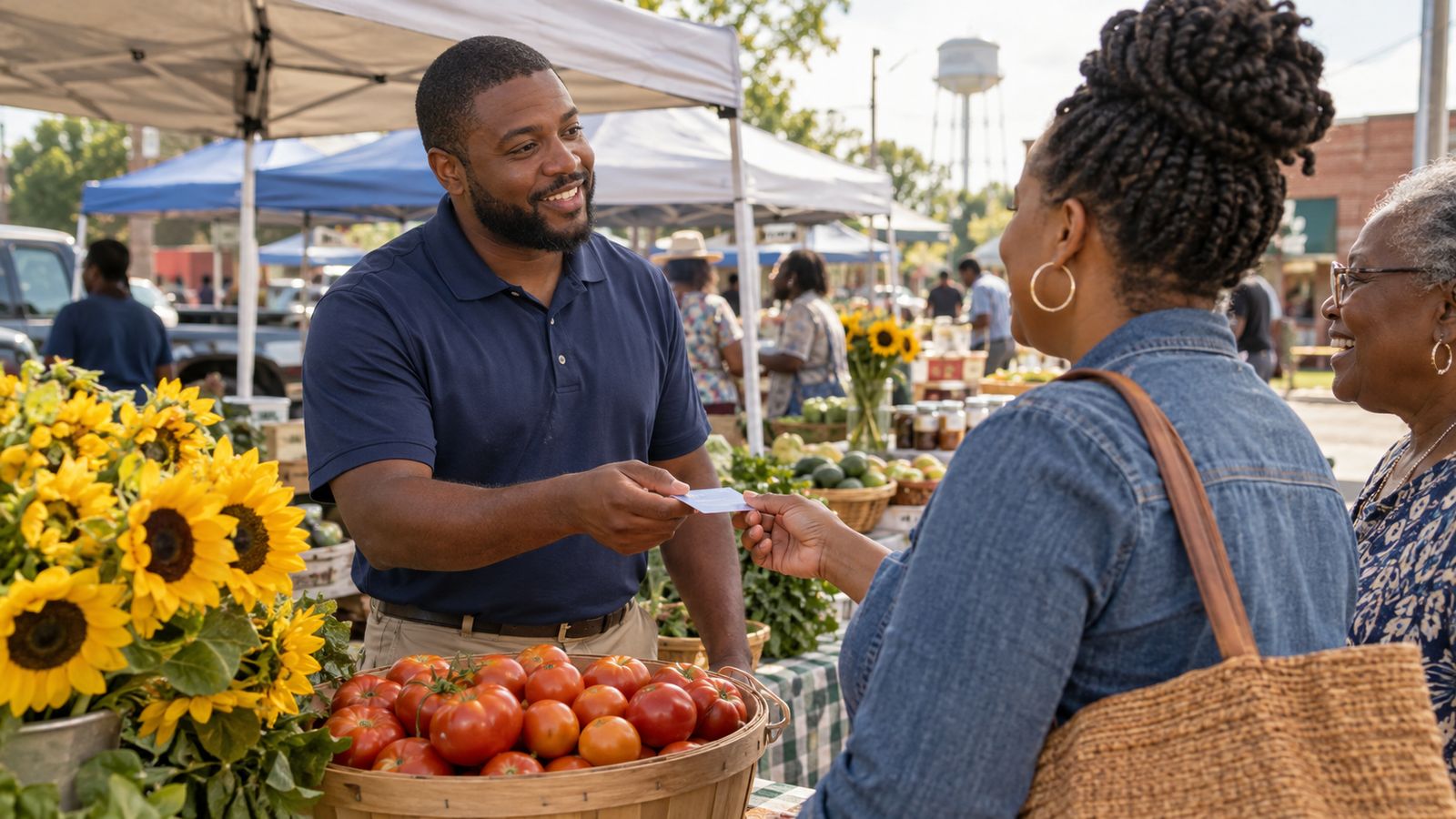
Forty percent of buyers found their agent through a friend, neighbor, or relative. Another 17% used an agent they had worked with before. That is the clearest answer to where business comes from: people trust people they know, and past clients can become future clients. (NAR)
That does not make online search, open houses, or content a waste of time. It means you should know what each channel does and what the data can and cannot tell you. Here is how buyers and sellers found agents, and where I would put my effort as a Mississippi agent.
Start with referrals and past clients
In NAR’s 2025 Generational Trends Report, 40% of buyers found their agent through a friend, neighbor, or relative, while 17% used an agent they had worked with before. Together, those categories account for 57% of buyers. (NAR)
NAR sums up the pattern this way: “Referrals remain the primary method most buyers use to find their real estate agent.” (NAR) A referral is not automatic business. It is an introduction and a measure of trust. You still have to respond, listen, and show that you understand the client’s needs.
The seller figures point in the same direction. Thirty-eight percent of sellers found their agent through a friend, neighbor, or relative, and 28% used an agent they had worked with before. Together, those categories account for 66% of sellers. (NAR)
Repeat business takes time to build. NAR reports, “Older buyers were more likely to work with an agent they had previously used to buy or sell a home.” (NAR) Treat the work after closing as part of the relationship, not as an afterthought.
Make your sphere a real business habit
Your sphere is the people who already know you: family, friends, former coworkers, neighbors, community contacts, and clients. It is not a list to blast with generic sales messages. It is a group of relationships to maintain with useful, consistent communication.
NAR reports that 88% of buyers would use their agent again or recommend the agent to others. (NAR) The report states, “Eighty-eight percent would use their agent again or recommend their agent to others, which is also consistent across all generations.” (NAR) That is a strong willingness to recommend. It is not a guarantee that a recommendation will happen, or that someone will remember your name when asked.
Make it easy for people to remember what you do. Keep in touch in ways that feel natural. Share a clear answer when someone has a real estate question. After a transaction, ask for honest feedback and stay available. Those are habits, not a quick lead-generation trick.
Do not confuse referral economics with a promise of free business. Referrals take time and good service. But they begin with a relationship rather than a purchased contact, and the NAR discovery figures show how often that starting point matters. A new agent may need to build the circle before it produces much. That is normal, not evidence that referrals do not work.
Use open houses and online channels for what they do
Open houses can create conversations with people who are actively looking. They are not the dominant way buyers in NAR’s 2025 report found their agent. Five percent found their agent after seeing contact information on a For Sale or Open House sign, and another 5% met the agent at an open house. (Saige, citing NAR) That makes an open house one channel to work, not a dependable pipeline by itself.
Online home search and online agent discovery are different questions. NAR’s report says 51% of buyers found the home they purchased on the internet, while 29% found it through their agent. (Saige, citing NAR) Yet 6% found their agent through a website without a specific reference, and 7% inquired about a specific property they had seen online. (Saige, citing NAR) Buyers can browse online and still choose an agent through a personal connection.
Other surveys produce different channel rankings, so read the question and survey period before comparing numbers. Zillow’s 2025 buyer survey reports that websites or apps were the first source for finding an agent for 22% of buyers, while 20% first found the agent through a referral from a friend, relative, neighbor, or colleague. (Zillow Research) That is not the same measure or survey as NAR’s 2025 Generational Trends Report. It does show why an agent should not treat one channel as the whole market.
Make your online presence useful before making it frequent. Answer questions clearly. Show how you explain the process. Keep your contact information current. Content can help someone evaluate you, even when a referral or in-person introduction started the relationship.
Be cautious with lead-cost and conversion claims
Paid leads can be a business expense, but a low cost per contact is not the same as a low cost per client. A vendor’s average may not define what counted as a lead, whether the leads were comparable, or how many became clients. Do not use a headline figure as your budget without understanding its method.
Be just as careful with conversion-rate claims. Different sources may report different lead categories and different steps in the sales process. A contact is not an appointment. An appointment is not a signed client, and a signed client is not a closed transaction. Do not compare percentages unless the definitions and outcomes match.
Track your own numbers by source: contacts, conversations, appointments, signed clients, closings, and what you spent. Keep the definitions consistent. Give each channel enough time to produce a fair sample, but do not keep paying for attention that never becomes a qualified conversation.
This is not complicated, but it does require discipline. A simple spreadsheet or CRM report can show whether a source is producing clients at a cost and pace that make sense for your business. Your own records are more useful than a broad promise about the next platform or tactic.
Build a mix, but know what is working
Agent business does not come from one universal formula. HousingWire reports that NAR’s 2025 Member Profile found 20% of a typical Realtor’s business came from past clients, while 1% came from non-personal referrals in 2024. (HousingWire, citing NAR) The profile describes agents’ business sources, while buyer and seller reports describe how consumers found agents. Those are related questions, but not interchangeable measures.
There is also a difference between first finding an agent and choosing one. Zillow’s 2025 survey lists websites and apps as the most common first source, at 22%. (Zillow Research) Separately, NAR’s 2025 Profile of Home Buyers and Sellers reports that 88% of buyers purchased through an agent or broker. (NAR) Online discovery does not make agent service irrelevant. It may be one step in a longer path.
For a newer agent, the practical mix may include staying in touch with people you know, asking satisfied clients for introductions, hosting open houses, and publishing useful local information. For an experienced agent, repeat relationships may carry more weight. NAR’s 2024 Member Profile figures, as reported by Saige, show median shares of repeat-client business and referrals from past clients below 1% for agents with two years or less of experience, compared with 42% and 29% for agents with 16 or more years. (Saige, citing NAR) That is a difference in career stage, not a reason to ignore relationship-building early on.
Use the channels you can work consistently. Review the results every few months. If a channel produces attention but no qualified conversations, change the approach or stop paying for it. If a channel produces good clients, protect the time and follow-up it requires.
How I approach it at HomesRX
When I talk with agents about getting clients, I start with the business they can build through trust and follow-through. I ask them to separate the source of an introduction from the work that turns it into a client. A referral can open the door. Clear communication and dependable service still matter.
I also tell agents to track results rather than copy someone else’s lead strategy. Keep a record of where conversations began, what moved forward, and what the channel cost in time and money. That gives you a more useful answer than a broad promise about the next platform or tactic.
I am an approved Mississippi continuing education provider, and I offer free CE training to licensed agents. If you are weighing a move into the business or a change of brokerage and want a candid conversation, call me at (601) 667-8414.
Frequently asked questions
What is the main source of real estate clients?
In NAR’s 2025 Generational Trends Report, 40% of buyers found their agent through a friend, neighbor, or relative, and 17% used an agent they had worked with before. (NAR)
Do open houses generate clients?
They can generate conversations, but the NAR buyer-discovery figures summarized by Saige put meeting an agent at an open house at 5% of buyers. (Saige, citing NAR) Treat an open house as one channel to work, not as a guaranteed source of clients.
Are online leads worth paying for?
They may be, but the cost of a lead alone does not tell you whether it will become a client. Track contacts, appointments, signed clients, closings, and total cost by source, then make a decision from your own results.
The takeaway
Build a simple, consistent follow-up system for past clients and your sphere, then measure every other channel against real conversations and closed business. Referrals matter, but knowing your own numbers is how you decide where the next hour and dollar should go.
Dr. Zakk Varughese is the broker-owner of HomesRX in Brandon, Mississippi, a REALTIST® and Founder and Chairman of the Board of the Gulf Coast Association of REALTISTS®. Questions about buying or selling in Central Mississippi or on the Gulf Coast: (601) 667-8414 or SoldByZakk.com.
Sources
- National Association of REALTORS®, 2025 Home Buyers and Sellers Generational Trends Report (2025) — https://cms.nar.realtor/sites/default/files/2025-04/2025-home-buyers-and-sellers-generational-trends-04-01-2025.pdf?_gl=1*1fy3ghn*_gcl_au*MTQwNTQ2MTM4Ny4xNzQzNzgyNjU1
- National Association of REALTORS®, 2025 Home Buyers and Sellers Generational Trends Report (2025) — https://cms.nar.realtor/sites/default/files/2025-03/2025-home-buyers-and-sellers-generational-trends-report-04-01-2025.pdf
- Saige, Where Real Estate Clients Come From: NAR Data — https://www.realsaige.com/real-estate-lead-generation/where-real-estate-clients-come-from
- Saige, How Real Estate Agents Get Clients: The Data — https://www.realsaige.com/real-estate-lead-generation
- Zillow Research, Buyers: Results from the Zillow Consumer Housing Trends Report 2025 (November 6, 2025) — https://www.zillow.com/research/buyers-housing-trends-report-2025/
- HousingWire, From Zillow to real estate referrals: The evolving landscape of lead generation (September 17, 2025) — https://www.housingwire.com/articles/from-zillow-to-real-estate-referrals-the-evolving-landscape-of-lead-generation/
- National Association of REALTORS®, NAR 2025 Profile of Home Buyers, Sellers Reveals Market Extremes (November 4, 2025) — https://www.nar.realtor/news/real-estate-news/nar-2025-profile-of-home-buyers-sellers-reveals-market-extremes