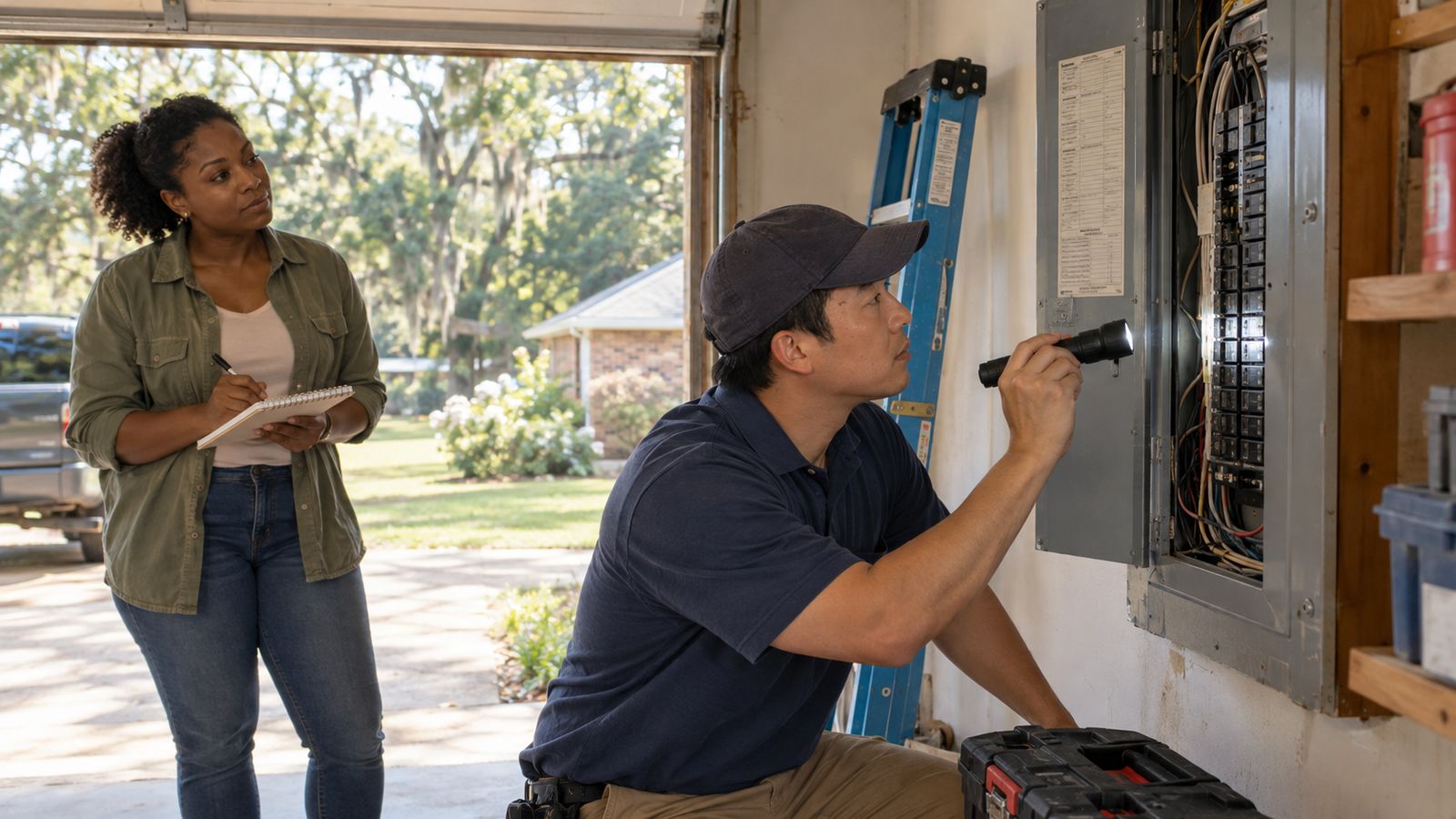
A home inspection is a snapshot, not a promise that nothing will break after closing. ASHI says, “A home inspector will not pass or fail a house but rather describe its physical condition and indicate what components and systems may need major repair or replacement.” (ASHI)
Before you buy in Mississippi, know what a standard inspection covers, what it leaves out, and which extra checks may be worth ordering. I’ll also explain how to read the report and use your inspection period without giving up useful information.
What a standard inspection covers
A standard inspection is a visual review of accessible parts of the home. ASHI lists the heating and central air systems, plumbing, electrical system, roof, attic and visible insulation, walls, ceilings, floors, windows, doors, foundation, basement and structural components among the areas covered. (ASHI)
The standard is not an exhaustive investigation. ASHI’s Standard of Practice says, “The inspector shall inspect readily accessible, visually observable, installed systems and components listed in this Standard.” (ASHI Standard of Practice) The inspection is visual and limited. An inspector may not move furniture or stored belongings, open finished walls, or reach areas that are blocked or unsafe. Ask the inspector to identify anything that could not be examined and why.
The standard applies to buildings with four or fewer dwelling units and attached or detached garages and carports. (ASHI Standard of Practice) InterNACHI says an inspector is not required to operate cooling equipment when the exterior temperature is below 65 degrees Fahrenheit. (InterNACHI Standards of Practice) If the system could not be tested, ask what follow-up is appropriate.
Keep the basic limitation in mind. InterNACHI says, “The general home inspection is based on the observations made on the date of the inspection, and not a prediction of future conditions.” (InterNACHI Residential Standards of Practice Course) A clean report cannot promise that a system will keep working or reveal every hidden defect.
Budget for the inspection and attend if you can
Published cost estimates vary. The Home Depot gives an average range of $200 to $500 for a home inspection. (The Home Depot) House Beautiful reports a typical range of $300 to $500 and also cites an average of around $400. (House Beautiful) Those figures are not a Mississippi quote. Get a current price from local inspectors, and ask what the fee includes before you book.
Cost can depend on the property and the scope. A basic inspection is not automatically a package of specialized tests. Ask whether the quote includes add-ons, the written report, and a return visit if a system could not be evaluated on inspection day. Confirm the inspection deadline in your contract before scheduling.
ASHI says a single-family home inspection usually takes 2 to 4 hours, depending heavily on the home’s size and condition, and reports often arrive within 24 to 48 hours. (ASHI) If possible, attend. ASHI recommends that buyers do so to see the findings and ask questions. (ASHI) Ask the inspector to distinguish a safety concern or significant defect from routine maintenance and an item that simply needs monitoring.
Consider the extra inspections that fit the property
Ask directly whether a separate termite or wood-destroying insect inspection is needed and whether it is included. Do not assume that a general inspection evaluates insects or related damage. The Home Depot lists an average termite inspection cost of $50 to $280, but treat that as a broad published estimate, not a local quote. (The Home Depot) If the report notes signs of insects, damage, or areas that could not be viewed, ask what specialist should assess them and what documentation you should request.
Radon testing is another separate question. The Home Depot lists an average radon-testing cost of $800 to $2,000. (The Home Depot) That broad estimate is not a Mississippi-specific price. Ask a qualified local provider whether testing makes sense for this property, what the test includes, and how long results take.
A sewer scope may be worth discussing when the home’s plumbing, age, or available records leave questions about the sewer line. Ask whether the scope is available, who performs it, and whether the camera reaches the full line. ASHI includes the interior plumbing system in its standard inspection list, but that alone does not tell you whether a separate sewer-line evaluation is part of your inspector’s service. (ASHI) Choose add-ons based on the house and the questions you need answered, not on a one-size-fits-all package.
Read the report for risk, not just repair lists
Reports can be long. Start with items that affect safety, water entry, structural condition, or whether a major system works. Then note repairs that need a specialist’s diagnosis, routine maintenance, and items to monitor. Ask the inspector to explain the difference. A home inspection is not an appraisal and does not determine market value or verify local code compliance. (ASHI)
Pay attention to limitations and missing information. InterNACHI defines a material defect as an issue that may significantly and adversely affect value or pose an unreasonable risk to people. (InterNACHI Standards of Practice) It also says, “The general home inspection will not reveal every issue that exists or ever could exist, but only those material defects observed on the date of the inspection.” (InterNACHI Residential Standards of Practice Course) If the report recommends further evaluation, get the right specialist’s opinion rather than guessing at the cause or cost.
Age alone is not the same as failure. InterNACHI says a system near or beyond its normal useful life is not, by itself, a material defect. (InterNACHI Standards of Practice) But an older system may still be a budget concern. Ask what the inspector observed, whether it is functioning, and what follow-up is warranted. Do not treat a general inspection as a warranty or a forecast of remaining life.
Use your inspection period before you waive it
The report gives you information to make a decision, not an automatic list of demands. Focus first on material defects, safety issues, and conditions that could require substantial work. For unclear findings, request a specialist’s written evaluation or a repair estimate. Then decide whether you want to ask for a repair, a credit, a price adjustment, or no change. Keep the request specific and tied to the report.
Your contract controls the inspection deadline and the choices available to you. Read the contingency language before you sign, and confirm the deadline with your agent or a qualified real-estate attorney if you are unsure. Waiving an inspection contingency before you understand the property means giving up an important opportunity to investigate. Do not rely on assumptions about whether you can cancel, negotiate, or recover a deposit. Those rights depend on the signed agreement and the facts.
Send questions and written requests before the contract deadline. Keep copies of the report, specialist findings, and any agreement about repairs or credits. If the seller agrees to work, put the scope and timing in writing and decide whether you need to verify the work before closing. A calm, documented request is more useful than treating every maintenance note as a crisis.
How I handle it at HomesRX
When I review an inspection report with a buyer, I start with what the inspector actually saw and what could not be checked. Then we sort the findings by urgency, possible cost, and whether a specialist needs to answer the next question. I do not want a buyer negotiating from a vague label when a clearer diagnosis is available.
I also tell clients to keep the contract deadline in view. We discuss what they want addressed, what they can accept, and what they need to clarify before deciding how to respond. The point is not to win every repair request. It is to make an informed decision before the inspection period ends.
Frequently asked questions
Does a home inspection pass or fail a house?
No. ASHI says, “A home inspector will not pass or fail a house but rather describe its physical condition and indicate what components and systems may need major repair or replacement.” (ASHI)
How much does a home inspection cost?
Published estimates vary: the Home Depot lists $200 to $500, while House Beautiful reports a typical $300 to $500 range and an average around $400. Ask inspectors for current local pricing and confirm what is included. (The Home Depot) (House Beautiful)
Should I waive the inspection contingency to make my offer stronger?
Do not waive it without understanding what your contract says and what information you would lose. An inspection reflects observed conditions on that day, not a prediction of future conditions. (InterNACHI Residential Standards of Practice Course)
The takeaway
Before your inspection period starts, book the general inspection, confirm the contract deadline, and ask whether termite, radon, or sewer-line checks should be separate. Use the report to ask focused questions, then make decisions before your deadline passes.
Dr. Zakk Varughese is the broker-owner of HomesRX in Brandon, Mississippi, a REALTIST® and Founder and Chairman of the Board of the Gulf Coast Association of REALTISTS®. Questions about buying or selling in Central Mississippi or on the Gulf Coast: (601) 667-8414 or SoldByZakk.com.
Sources
- American Society of Home Inspectors, What is a Home Inspection? — https://www.homeinspector.org/for-consumers/what-is-a-home-inspection/
- ASHI Standard of Practice for Home Inspections, effective March 1, 2014 — https://www.homeinspector.org/wp-content/uploads/2024/06/standards_updated3-4-2015.pdf
- Upchurch Inspection, InterNACHI Standards of Practice — https://upchurchinspection.com/standards-of-practice/home-inspection-standards-of-practice/
- The Home Depot, How Much Does a Home Inspection Cost? — https://www.homedepot.com/c/ab/how-to-prepare-for-a-home-inspection/9ba683603be9fa5395fab90111f130d5
- House Beautiful, How Much Does a Home Inspection Cost in 2025? (April 29, 2025) — https://www.housebeautiful.com/design-inspiration/real-estate/a64620639/how-much-is-home-inspection/
- InterNACHI Residential Standards of Practice Course — https://education.nachi.org/coursemedia/course-1/documents/InterNACHI%20Residential%20Standards%20of%20Practice%20Course%201-compressed.pdf