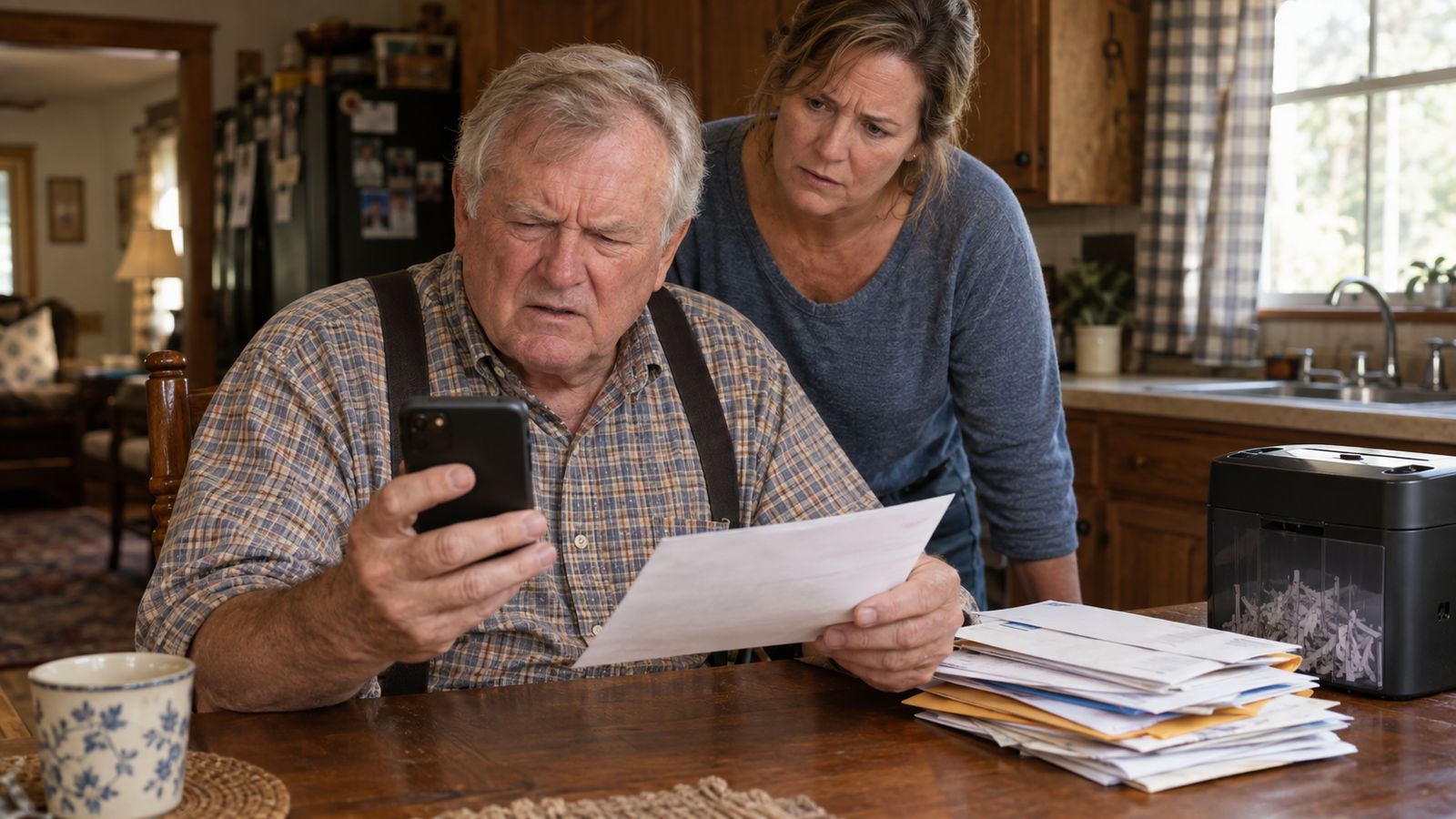
In 2025, the FBI recorded 12,368 real estate fraud complaints and $275,110,419 in reported losses. Those are national figures, but the risk can become very local when a buyer wires closing funds or an owner’s identity is used without permission. (FBI IC3)
Here are the scams I want Mississippi buyers and sellers to recognize: closing-wire fraud, seller impersonation, rental scams, deed fraud and fake agents. I’ll explain how they work, what warning signs matter and what to verify before money or property changes hands.
Closing-wire fraud: verify every change
This is the scam I most want buyers to understand before closing. A criminal may get into an email conversation involving a buyer, agent, attorney, lender or title company, then send new instructions that redirect the buyer’s closing funds. The message may look like a routine part of the transaction. Do not treat a familiar name or an ongoing email thread as proof that the instructions are legitimate.
The FBI described one home-closing case this way: “The individuals were closing on a home when they received an email impersonating their legitimate attorneys.” The buyers wired more than $449,000 to the recipient bank. (FBI IC3) In another case, a senior citizen received wire instructions for more than $1.3 million from a compromised title-company email account. (FBI IC3)
The wider business email compromise figures show why this deserves attention. In 2025, the FBI recorded 24,768 such complaints and $3.04 billion in reported losses, and home closings and wire transfers are common targets. (HousingWire) Not every business email compromise involves real estate, but the pattern fits the risk at closing: a convincing message can redirect a large payment.
Before sending money, call your title or escrow contact using a number you saved earlier or obtained independently. Do not use the phone number or link in a new message. If anyone changes the account number, payment method or timing, pause and verify the change by voice. Never let urgency replace verification.
Seller impersonation and deed fraud
In seller impersonation, a fraudster pretends to own a property and tries to sell it. Vacant land can be a target because an owner may live elsewhere and the property may have little regular activity. ALTA describes the scheme this way: “Scammers who comb through public records to find vacant parcels of land and properties that don’t have a mortgage or other lien and then impersonate the landowner, asking a real estate agent to list the property.” (ALTA)
The risk is not limited to vacant land. An impostor may use public information to pose as an owner, communicate remotely and push for a quick sale or unusual payment directions. A supposed seller who avoids a live conversation, resists ordinary identity checks or insists on an unusual process gives you a reason to stop and investigate. Those signs do not prove fraud, but they should not be brushed aside.
Deed fraud is related, but it is not exactly the same scam. A forged deed or other fraudulent filing can cloud ownership and lead to a costly dispute. The FBI reported 58,141 real estate fraud victims and $1.3 billion in losses nationwide from 2019 through 2023, but those figures cover real estate fraud generally, not deed fraud alone. (ALTA)
Title professionals can help identify and address risks in the ownership record. ALTA’s chief executive said, “Title is protection. Title professionals are not simply processing paperwork. They help protect consumers and property rights against costly fraud, forgery and other hidden risks tied to property ownership.” (ALTA) Ask how ownership and authority to sell are being verified. Do not treat a familiar-looking document as proof by itself.
Rental scams: verify the listing before paying
The FBI defines real estate fraud to include “Loss of funds from a real estate investment or fraud involving rental or timeshare property.” (FBI IC3) The national category does not provide a separate Mississippi rental-scam total, so I will not present one. The practical risk is straightforward: someone may advertise a property they do not control, collect an application fee or deposit, and fail to provide the promised rental.
Before you pay, confirm that the person has authority to rent the property. Ask to see it in person or arrange a live viewing, and independently check the contact and ownership details. Be cautious if the person will not meet, demands immediate payment to “hold” the property, or asks you to use an unusual payment method. A polished listing is not proof that the person controls the property.
Keep copies of the listing, messages, payment request and receipt. If you discover that the listing or contact was false, contact your bank or payment provider promptly and report the incident to law enforcement. Do not send more money because someone promises an extra fee will release a refund.
Fake agents, phishing and AI-enabled deception
A fake agent may use another person’s name, photo or license information to gain trust. The goal may be to collect a deposit, personal information or a wire payment. Verify an agent’s identity through an independently found brokerage contact or the state licensing authority. A professional-looking profile, email address or document does not prove who is on the other end.
Phishing messages can try to steal passwords or gain access to a legitimate account. The FBI has warned that messages may contain phishing links or directions to wire funds, and that voice cloning can be used to request a wire payment. (HousingWire) In 2025, the FBI reported 115 AI-related crimes within real estate, with $2.7 million in losses. (National Mortgage News)
That is why I would not rely on a voice message or video call to approve a new payment instruction. Call a number you saved earlier, using a separate channel to confirm who you are speaking with. Do not email sensitive financial information. The CFPB warning quoted in HousingWire says email is “never a secure way to send sensitive financial or personal information.” (WV News)
A short checklist before money moves
First, save verified contact numbers for your lender, agent, attorney and title or escrow contact when the transaction begins. Second, agree on how payment instructions will be delivered and how you will verify them. Third, treat any last-minute change as unconfirmed until you have spoken with a trusted contact using a number you already have.
For a sale, make sure the people handling the transaction have a clear process for confirming the seller’s identity and authority to sell. For a rental, verify that the person offering the property is authorized to do so before paying. Keep the original messages and documents. If a transfer has already gone out, contact your bank immediately and report it to the FBI’s Internet Crime Complaint Center. Speed matters, but prevention is better.
The FBI recorded 2,473 real estate complaints from people aged 60 and older and $123,671,936 in reported losses for that age group in 2025. (FBI IC3) No one should be blamed for being deceived. Scams are designed to look routine, and a direct verification step is sensible for every buyer and seller, regardless of age.
How I handle it at HomesRX
When I work with buyers and sellers, I want the communication and payment process clear before a deadline gets close. We review who is involved, which contact details are trusted and what to do if an instruction changes. I tell clients not to treat an email as authorization to move money.
If something feels rushed or different, stop and call a number you already know. I would rather answer a verification question early than have a client take a risk because a message looked convincing. The same habit applies to rental deposits, seller identity checks and requests for personal information.
Frequently asked questions
What should I do if I receive new wire instructions?
Do not send the money based on the message. Call your title or escrow contact using a number you saved or independently confirmed, and verify the instructions directly. The FBI has documented closing scams involving emails impersonating attorneys and compromised title-company email. (FBI IC3)
Can a scammer pretend to own vacant land?
Yes. ALTA describes scammers using public records to identify vacant parcels and impersonate the owner when asking an agent to list the property. (ALTA) Verify identity and authority to sell before proceeding.
What if I already sent money to a suspected scammer?
Contact your bank or payment provider immediately and ask whether the transfer can be stopped or recalled. Preserve the messages and payment records, and report the incident to law enforcement and the FBI’s Internet Crime Complaint Center.
The takeaway
Before you send money or share sensitive information, verify the person and the instructions through a contact method you already trust. A pause and a direct call can prevent a costly mistake.
Dr. Zakk Varughese is the broker-owner of HomesRX in Brandon, Mississippi, a REALTIST® and Founder and Chairman of the Board of the Gulf Coast Association of REALTISTS®. Questions about buying or selling in Central Mississippi or on the Gulf Coast: (601) 667-8414 or SoldByZakk.com.
Sources
- FBI, 2025 IC3 Annual Report — https://www.ic3.gov/AnnualReport/Reports/2025_ic3report.pdf
- HousingWire, FBI: Cybercrime losses topped $20.8B in 2025, real estate fraud hit $275M — https://www.housingwire.com/articles/fbi-cybercrime-losses-real-estate-fraud-hits-275m/
- ALTA, FBI Boston Issues Quit Claim Deed Fraud Warning (April 10, 2025) — https://www.alta.org/news-and-publications/news/20250410-FBI-Boston-Issues-Quit-Claim-Deed-Fraud-Warning
- ALTA, Latest FBI Cybercrime Report Shows Real Estate Fraud Losses Rising — https://www.alta.org/news-and-publications/press-release/Latest-FBI-Cybercrime-Report-Shows-Real-Estate-Fraud-Losses-Rising-Reinforcing-Need-for-Strong-Consumer-Safeguards
- National Mortgage News, FBI: Real estate cyberfraud rises with more AI, crypto scams — https://www.nationalmortgagenews.com/news/fbi-real-estate-cyberfraud-rises-with-more-ai-crypto-scams
- WV News, Taylor Weiner Team Marks Cybersecurity Awareness Month With a Closing-Funds Warning — https://www.wvnews.com/online_features/press_releases/taylor-weiner-team-marks-cybersecurity-awareness-month-with-a-closing-funds-warning-as-fbi-reports/article_db6f3208-e159-564f-98ba-257c0e8ccff4.html