In a 2025 survey, 37% of recent homebuyers said they had no regrets, up from 31% in 2023. Among buyers who did have second thoughts, the most common complaint was more maintenance than expected, reported by 16%. (Realtor.com)
Here are 100 questions to take from your first budget conversation through closing day. You will not need every answer before making an offer. You should know what to ask, who can answer it, and what needs to be verified in writing.
Start with your budget and plans
Start with the full cost of buying and owning, not just the monthly mortgage payment. Ally puts closing costs at 2% to 5% of the mortgage amount. (Ally) On Zillow’s $194,531 average Mississippi home value, 2% to 5% is about $3,891 to $9,727. (Zillow) Your actual costs depend on your loan and transaction.
- What monthly payment can I manage comfortably?
- How much cash can I put toward the purchase?
- What will I have left in savings afterward?
- What closing costs should I expect?
- Will this loan require mortgage insurance?
- What interest rate and loan term fit my plans?
- Should I compare fixed-rate and adjustable-rate loans?
- What will my property taxes likely be?
- What insurance coverage will the lender require?
- Could the payment change after closing?
- What utilities and upkeep should I budget for?
- How long do I expect to stay in this home?
- Could work or family plans make me move?
- Do I have enough room in my budget for repairs?
- Have I compared loan estimates from more than one lender?
- What documents does the lender still need from me?
- What is my deadline to lock an interest rate?
- Can I afford this home without relying on future income increases?
Ask the lender to explain each estimate in writing. A low advertised payment does not tell you the full amount of cash needed to buy. Farm Bureau Financial Services says it generally takes five years or more to break even on the costs of buying, owning, and selling a home. (Farm Bureau Financial Services)
Check the location and everyday routine
A home is also a place you travel from, park at, and maintain. Visit at different times if you can. Ask for information about the things you cannot judge during a quick showing.
- How long is the commute at the times I travel?
- What are the closest grocery stores and services?
- How does traffic change during the day?
- Are there nearby roads, businesses, or other noise sources?
- Where will guests park?
- Are sidewalks, public transit, or bike routes available?
- What internet providers serve the address?
- Does the property have access to city water and sewer?
- Is trash pickup included, and what is the schedule?
- Are there planned road or utility projects nearby?
- What are the applicable zoning rules?
- Are there restrictions on additions, fences, or outbuildings?
- Does the property sit in a flood zone?
- How does rainwater drain around the lot?
- What will the location mean for my daily routine?
For a local perspective, ask specific questions about access, services, and property rules. Verify important details with the relevant local office rather than relying on an informal answer.
Ask about the house and its costs
Look beyond fresh paint and staged rooms. Ask about the age, condition, and service history of major systems. Zillow puts the national average for electricity, gas, water, and heating fuel at $3,426 annually, based on its analysis of 2022 Census data. (Zillow) Actual bills vary by household and home, so ask to see this property’s utility history.
- Why are the owners selling?
- How long has the home been on the market?
- What work has been done recently?
- Are permits available for renovations?
- How old is the roof?
- Has the roof leaked or been repaired?
- How old are the heating and cooling systems?
- When were the water heater and major appliances installed?
- Have there been plumbing leaks or backups?
- Has the electrical system been updated?
- Do doors and windows open and close properly?
- Are there signs of moisture in walls, ceilings, or floors?
- What materials are the floors, counters, and exterior made from?
- What stays with the house, including appliances and fixtures?
- Are there warranties or service records for major systems?
- What are the annual utility bills?
- Are there recurring pest or wildlife issues?
- Does the property have a septic system or private well?
- When were those systems last serviced or tested?
- What maintenance will likely be needed soon?
Do not treat a seller’s estimate as a substitute for records or professional evaluation. Ask for bills, receipts, permits, and warranties where available.
Get disclosures and inspect carefully
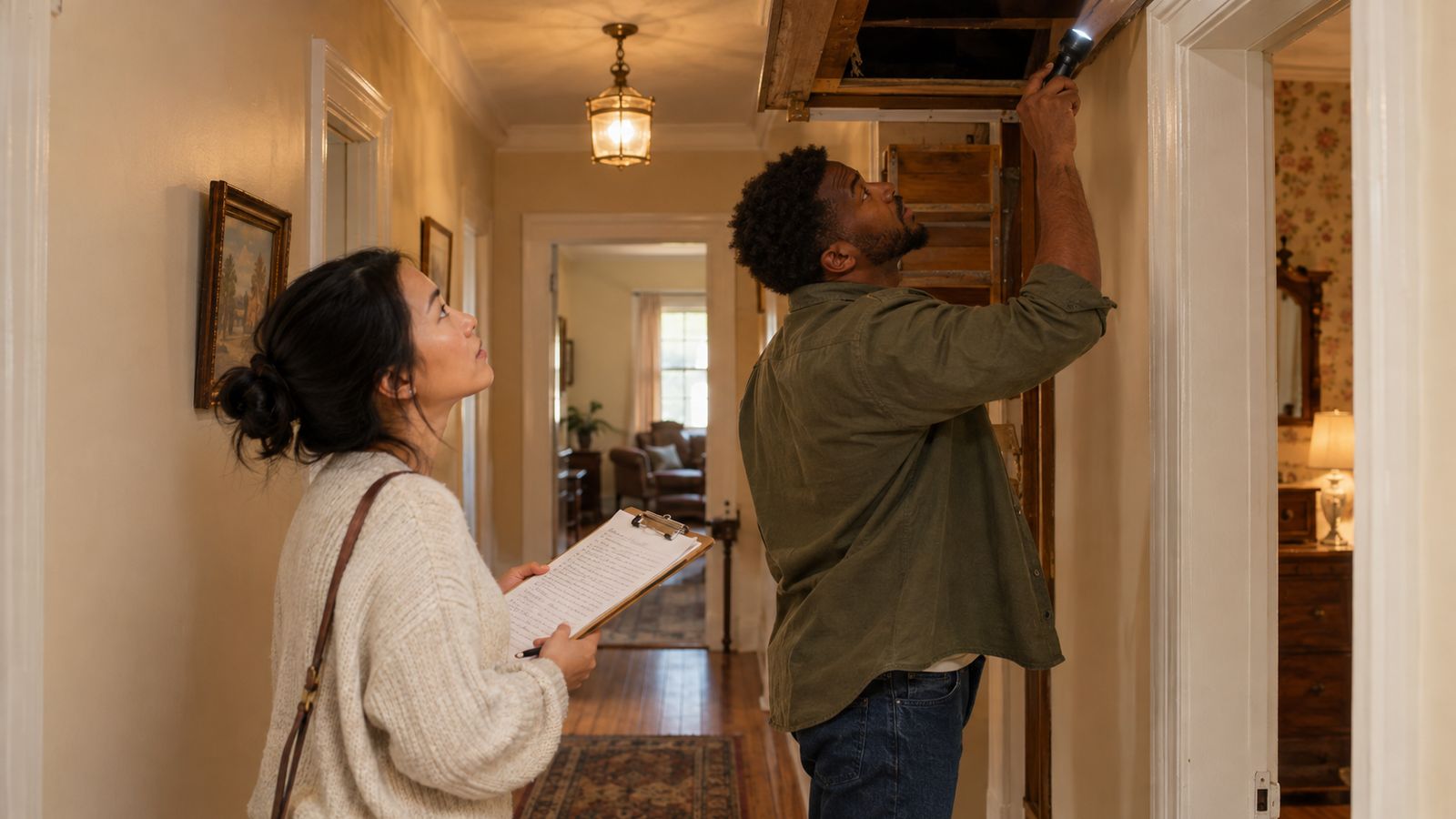
A home inspection is a chance to understand condition, not a promise that nothing will go wrong. Ally says, “A home inspection will typically reveal the condition of the house and whether any major repairs are needed.” (Ally) Read the report, ask the inspector to explain concerns, and decide what follow-up evaluations are appropriate.
- Can I choose my own licensed home inspector?
- What does the inspection cover, and what does it exclude?
- Can I attend the inspection?
- Are there areas the inspector could not access?
- What problems need attention right away?
- Which findings need evaluation by a specialist?
- Are there signs of foundation movement?
- Does the attic show signs of leaks or poor ventilation?
- Are there visible drainage problems around the foundation?
- Are smoke and carbon monoxide alarms present and working?
- Has the home been tested for radon, if appropriate?
- Are there concerns about lead paint or asbestos?
- What repairs have been made after earlier damage?
- Has the seller disclosed insurance claims or water damage?
- Can I review available insurance-claim history?
- What repairs will the seller address, if any?
- Should I request additional inspections before my deadline?
The Seattle Times recommends asking for the home’s claims history: “Get a copy of a Comprehensive Loss Underwriting Exchange, or C.L.U.E., report from the seller to see if there have been any homeowners insurance claims filed in the last seven years.” (The Seattle Times) Confirm what records are available and review them with your insurance professional.
Understand the offer and contract
Before you make an offer, understand the deadlines and the consequences of each term. The purchase agreement controls. Have your agent or a qualified attorney explain language you do not understand, especially contingencies, deposits, and repair terms.
- What comparable homes support the asking price?
- How much earnest money is expected?
- Who holds the earnest money?
- When could I lose the earnest money?
- What inspection contingency should I include?
- What happens if the appraisal is below the offer price?
- Is the offer contingent on financing?
- What is the deadline to obtain loan approval?
- Can I request seller-paid closing costs?
- What personal property is included in the offer?
- When does the seller want to close?
- Can I request a final walk-through?
- What happens if the seller misses a contract deadline?
- Are there other offers, and what is the offer deadline?
- What repairs or credits am I asking the seller to provide?
- Can I review every addendum before signing?
- Who should answer legal questions about the contract?
One useful question, quoted by Ally, is: “Has the home received any other offers, and if so, what happened with them?” (Ally) Ask it, but do not assume the answer establishes the home’s value or tells you what to offer.
Prepare for closing day
Closing is the final review, not the time to discover a surprise in the paperwork. The lender’s closing disclosure lays out loan terms and closing costs. The Seattle Times says the lender must provide it three business days before closing. (The Seattle Times) Read it promptly and raise differences before signing.
- When will I receive the closing disclosure?
- Do the loan terms match what I agreed to?
- Are the closing costs consistent with my estimate?
- How much cash must I bring to closing?
- What payment method does the closing office accept?
- Have I independently confirmed wire instructions?
- Will the title search show liens or ownership issues?
- Do I need title insurance?
- Have I arranged homeowners insurance to start on time?
- What identification and documents should I bring?
- Has the seller completed agreed-upon repairs?
- Does the final walk-through show any new damage?
- When will I receive the keys?
Take time to review the documents. If a number or term differs from what you expected, pause and ask for an explanation before you sign.
How I handle it at HomesRX
When I work with buyers, I want the questions out in the open early. We review the budget, property details, contract deadlines, and what still needs independent verification. I do not want a buyer guessing about a major cost because a showing felt rushed.
I also tell clients to keep records and ask for answers in writing when the answer affects their decision. An inspection report, utility history, disclosure, and closing estimate each answer different questions. Put them together before you decide.
Frequently asked questions
Should I skip the home inspection to make my offer stronger?
I would not treat an inspection as optional without understanding the risk. Ally says, “A home inspection will typically reveal the condition of the house and whether any major repairs are needed.” (Ally)
How much should I budget for closing costs?
Ally gives a range of 2% to 5% of the mortgage amount. (Ally) Ask your lender for an estimate based on your loan and transaction.
What homebuyer regret should I try hardest to avoid?
In Realtor.com’s 2025 survey, unexpected maintenance was the most common complaint among buyers who had regrets, at 16%. Ask about system ages, repair records, and inspection findings before you commit. (Realtor.com)
The takeaway
Save this list and bring it to your agent, lender, and inspector. Get clear answers, supporting records, and written terms before a deadline forces a decision.
Dr. Zakk Varughese is the broker-owner of HomesRX in Brandon, Mississippi, a REALTIST® and Founder and Chairman of the Board of the Gulf Coast Association of REALTISTS®. Questions about buying or selling in Central Mississippi or on the Gulf Coast: (601) 667-8414 or SoldByZakk.com.
Sources
- Ally, A checklist of 22 essential questions when buying a house (July 24, 2025) — https://www.ally.com/stories/home/questions-to-ask-when-buying-a-house/
- Zillow, Mississippi Housing Market: 2026 Home Prices & Trends (September 30, 2026) — https://www.zillow.com/home-values/34/ms/
- Realtor.com, Buyer Satisfaction Among New Homeowners Is Growing, but This Generation Feels the Most Remorse (November 20, 2025) — https://www.realtor.com/news/trends/buyers-remorse-homeowners-purchasing-survey-2025/
- Farm Bureau Financial Services, Buying a House for the First Time (January 23, 2026) — https://www.fbfs.com/learning-center/buying-a-house-for-the-first-time
- Zillow, 26 Questions to Ask When Buying a House (October 29, 2024) — https://www.zillow.com/learn/questions-to-ask-when-buying-a-house/
- The Seattle Times, 15 Best Questions to Ask When Buying a House — https://www.seattletimes.com/business/sarah-li-cain-15-best-questions-to-ask-when-buying-a-house/